
Your Body After Birth: What's Really Happening Postpartum with Your Immune System
The weeks after having a baby are one of the most intense physical transitions of your life — here's what's going on inside, and what an ancient healing tradition has always understood about it
If you've had a baby and felt like your body was completely falling apart in the weeks afterward — exhausted in a bone-deep way, catching every illness, maybe dealing with unexpected health issues you never had before — you're not imagining it, and you're not being dramatic.
Your immune system just completed one of the most complex tasks it will ever perform, and now it's in the middle of a massive, turbulent rebuild. Understanding what's actually happening can be genuinely reassuring. And it turns out that traditional Chinese medicine, which has supported new mothers for thousands of years, was paying close attention to this process long before modern science had the tools to explain it.
First: What Your Immune System Did During Pregnancy
Your immune system's whole job is to identify and attack anything that doesn't belong in your body. So here's a puzzle: your baby shared your body for nine months, but carried genetic material from their father — meaning, to your immune system, the baby was partly "foreign." Why didn't your body attack it?
The answer is that your immune system essentially turned down a significant part of itself for the duration of the pregnancy. It shifted into a gentler, more tolerant mode — suppressing the aggressive, attack-focused side and boosting the more calm, protective side. This is a remarkable feat of biological regulation.

Think of your immune system as having two modes: an "attack" mode for fighting infections and abnormal cells, and a "tolerance" mode for protecting things the body needs to accept (like a growing baby, or a transplanted organ). Pregnancy requires staying in tolerance mode for nine months. After birth, the body has to rapidly switch back to attack mode — and that switch can be messy.
This shift also explains something interesting: autoimmune conditions like rheumatoid arthritis (where the immune system attacks the body's own joints) often get better during pregnancy, because the immune suppression also quiets down the misdirected attacks. Allergies and asthma, on the other hand, can worsen. The whole immune system is recalibrated.
In traditional Chinese medicine, pregnancy is understood to draw on a woman's deepest reserves of vitality — what TCM calls Kidney Essence (Jing), the fundamental life force stored in the body that governs reproduction and development. Growing a baby is considered one of the most demanding things a body can do, drawing on resources that take time to replenish.
TCM also considers the blood (Xue) to be central to pregnancy — the body uses its blood to nourish the fetus and the uterus, and birth, which inevitably involves blood loss, leaves a significant deficit. This shapes everything about how TCM approaches postpartum recovery.
What Happens Right After Birth
Once your baby is born, your immune system gets the signal that it no longer needs to hold back. It begins an abrupt, dramatic swing back toward its normal state. But "back to normal" is not a smooth, gentle process — it's more like turning a tanker around at full speed.
The inflammatory rebound
The suppressed, aggressive side of your immune system comes rushing back online. This is actually necessary — your body needs to close wounds, clean up the uterine lining, and get back on guard against infections. But this surge of immune activity can overshoot, especially in women who are already prone to certain conditions.
This is why several autoimmune conditions that improved during pregnancy tend to flare in the postpartum period. It's not a sign that something went wrong — it's the immune system doing exactly what it's supposed to, just sometimes with too much force in the wrong direction.
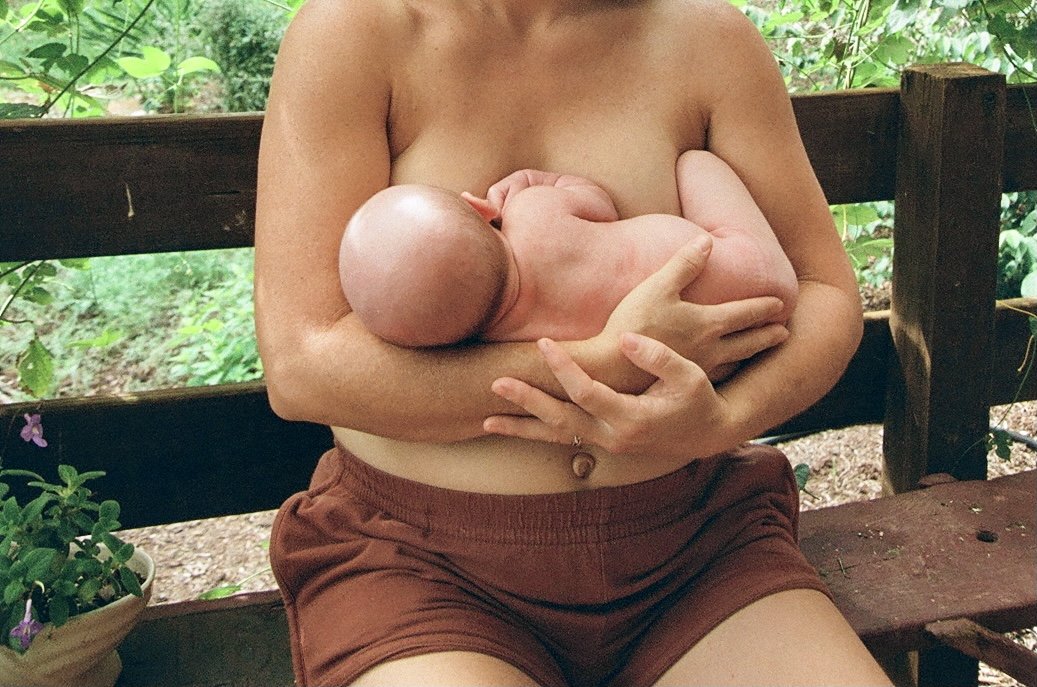
As if birth wasn’t a big enough portaI to come through, in the days and weeks postpartum the body continues to change at a rapid pace.
Your uterus shrinks with immune help
The process of your uterus shrinking back to its pre-pregnancy size (called involution) is actually driven by your immune system. Immune cells flood in to break down and remodel the uterine tissue. This is why afterpains — cramping in the days after birth — are often more intense with second and subsequent babies, as the uterus works hard and the immune response is more robust. Adequate rest and nutrition directly support this process.
Your defensive cells surge back
Certain immune cells that were deliberately quieted during pregnancy to protect the baby — including natural killer cells, which patrol the body for infected or abnormal cells — reactivate sharply after birth. In some ways your immune system becomes more reactive in the early postpartum period, even as the overall system is in a state of flux.
"Your body after birth isn't broken or depleted — it's in active reconstruction. Understanding that changes everything about how we think about postpartum care."
Common Issues That Arise — and Why
When you know about this immune upheaval, a lot of common postpartum health problems start to make more sense.
Thyroid Problems
Affects up to 1 in 10 new moms
First feels like hyperthyroid: anxiety, racing heart, weight loss
Then swings hypothyroid: fatigue, depression, feeling cold
Often mistaken for "just being a new mom"
Mastitis
Breast inflammation, affects ~1 in 5 breastfeeding women
Starts with milk stasis, bacteria enter through cracked nipples
Causes fever, flu-like aches, breast pain and redness
Needs prompt attention to prevent abscess
Autoimmune Flares
Conditions that improved in pregnancy often rebound
Includes rheumatoid arthritis, lupus, Hashimoto's
New autoimmune conditions can also emerge
The immune "rebound" overshoots in susceptible women
Recurring Infections
Dormant viruses (like cold sores) can reactivate
UTIs are common due to tissue changes
Fatigue and immune flux reduce resistance
The "open gate" of postpartum is a real vulnerability
Postpartum thyroiditis — the one most women never hear about
This one deserves special attention because it's so common and so under-recognized. Postpartum thyroiditis affects roughly 5–10% of new mothers and is caused by the immune system's rebound attacking the thyroid gland. The symptoms are easy to dismiss or attribute to new parenthood: fatigue, mood changes, feeling too warm or too cold, hair loss, brain fog.
The condition often resolves on its own within a year, but some women go on to develop permanent thyroid problems. If you're experiencing unexplained fatigue, anxiety, or low mood that doesn't improve in the first year, asking your doctor about thyroid antibody testing is a reasonable step.
The mood connection
Here's something that often surprises people: postpartum depression and anxiety have a significant immune component. Research has found that higher levels of inflammatory molecules in the blood are linked to postpartum mood disorders. Women whose immune systems show more disruption during and after pregnancy have higher rates of postpartum depression. This doesn't mean depression is "just inflammation" — it's complex — but it does mean that supporting the body's physical recovery also supports mental and emotional health. They are not separate.
TCM has always understood mood and body as inseparable in the postpartum period. When the blood is depleted, TCM says, the Heart — which houses the spirit (Shen) — has nothing to anchor it. The result is anxiety, weepiness, disturbed sleep, and emotional instability. In more severe cases, stagnation sets in: a feeling of being stuck, flat, or trapped that we'd recognize as depression.
Treatment isn't just emotional support — it's rebuilding the blood and moving stagnation through nourishing foods, specific herbs, and rest. The emotional and the physical are treated as one system.
What Traditional Chinese Medicine Has Always Known
For thousands of years, cultures across East Asia have observed a practice called zuò yuè zi — "sitting the month" — in which a new mother rests for 30 to 40 days after birth, is kept warm, is fed nourishing foods, and is protected from physical and emotional strain. Similar traditions exist across many cultures around the world. Western medicine dismissed many of these practices for decades as superstition. Modern immunology is quietly vindicating them.
The "open gate" concept
TCM describes the postpartum body as having "open gates" — the idea that the pores, joints, and channels of the body are unusually porous and vulnerable after birth, making it easy for cold, wind, and dampness to enter and cause lasting problems. Women who were exposed to cold drafts or did too much physical work too soon after birth were considered especially vulnerable to chronic pain and fatigue later in life.
This maps surprisingly well onto what we now understand about postpartum immune instability. During the weeks of immune rebuilding, the body genuinely is more vulnerable to infections taking hold, inflammatory responses going awry, and the normal equilibrium being disturbed. Rest, warmth, and protection from stress aren't indulgences — they're biologically sensible.
Blood and Qi deficiency
TCM's central diagnosis for the postpartum body is Blood and Qi deficiency — the body has spent its blood nourishing the baby and lost more during birth, and its vital energy is depleted. In modern terms, this overlaps significantly with iron-deficiency anemia (extremely common after birth), protein depletion, energy deficits, and the nutritional demands of milk production. The treatment: rebuild. Rest, warmth, and deeply nourishing food.
Herbal Support: The TCM Approach
TCM practitioners use specific herbal formulas during the postpartum period that have been refined over centuries. Here are the main ones you may encounter, in plain terms:
Sheng Hua Tang
Taken in the first week after birth, this "generation and transformation" formula is designed to help the uterus expel its lining cleanly and contract back to size. It moves old blood out and warms the uterus. Think of it as the first phase of physical cleanup after birth.
Ba Zhen Tang
The "eight treasures" formula is essentially a blood and energy rebuilding tonic — the postpartum equivalent of a deep restock. It's indicated when a new mother is pale, exhausted, and depleted after significant blood loss or a particularly difficult birth.
Gui Pi Tang
This formula targets the heart-mind connection — for when exhaustion manifests as anxiety, insomnia, heart palpitations, and worry alongside physical depletion. It nourishes both the blood and the spirit.
Yu Ping Feng San
The "jade windscreen" — a formula designed to strengthen the body's defensive energy and close those "open gates." It's used to prevent repeated infections and is now being studied for its effects on the innate immune system, with its main herb, astragalus, showing genuine immune-supporting properties in research.
Dang Gui
Often called the "female ginseng," this single herb is the cornerstone of postpartum blood nourishment in TCM. It nourishes blood, moves stagnation, and eases pain. Modern research has confirmed it has anti-inflammatory, uterus-relaxing, and immune-modulating effects — a nice convergence of old wisdom and new science.
Food as medicine
TCM postpartum dietary guidance is extensive, but the core principles are simple: eat warm, cooked, easy-to-digest food. Avoid cold, raw, and icy foods and drinks, which TCM considers taxing to the digestive system and the body's warmth. Include deeply nourishing foods: bone broth, slow-cooked soups, dark leafy greens, eggs, dark sesame seeds, organ meats if tolerated, ginger, and rice. Modern nutrition science largely agrees — the postpartum body needs iron, protein, omega-3s, zinc, and vitamin D, and these foods deliver them in easily absorbable forms.
What This Means for You
The exhaustion, vulnerability, and health issues of the postpartum period have real biological explanations. You are not weak — you are in the middle of one of the most demanding physical transitions of your life.
Unexplained fatigue, mood changes, hair loss, or temperature sensitivity in the first year after birth are worth discussing with your doctor — postpartum thyroiditis alone affects 1 in 10 women and is regularly missed.
Rest is not a luxury. During active immune reconstruction, adequate sleep and reduced physical strain are genuinely protective, not self-indulgent.
Warm, nutrient-dense food matters more in this period than almost any other. If you're breastfeeding and eating a restricted diet, or if you lost significant blood during delivery, discuss iron and nutrient levels with your provider.
TCM practices like herbal support and dietary nourishment have real rationale behind them — if you're interested, working with a licensed TCM practitioner alongside your conventional care team can offer an additional layer of support during this period.
Postpartum depression and anxiety are partly physical. Attending to your body — sleep, nourishment, warmth, support — is not separate from caring for your mental health. It is caring for your mental health.
The Bottom Line
Your body after birth is doing something extraordinary. It spent nine months building a person and protecting them with every tool it had. Now it's rebuilding itself from the ground up. That takes time, nourishment, and rest — the same things that traditional Chinese medicine has been prescribing for millennia, and that modern science is now explaining in molecular detail.
Be patient with yourself. Be generous with rest. Eat well and stay warm. And if something feels wrong — thyroid symptoms, persistent fatigue, mood changes, recurrent infections — advocate for yourself. You deserve thorough care during one of your body's most demanding seasons.
This post is for educational and informational purposes. It is always best to consult a healthcare provider before starting or discontinuing any medications, supplements, or treatments. If you have concerns about your postpartum health, please speak with your healthcare provider. TCM herbal formulas should be used under the guidance of a licensed practitioner, especially while breastfeeding.